EYES ON THE STREET
EYES ON THE STREET


By Jairo Tomico | Published: July 30, 2026
LOCATION: National Pharmacy Chains & Commercial Retail Outlets
STATUS: Active / Live Deployment
OVERVIEW:
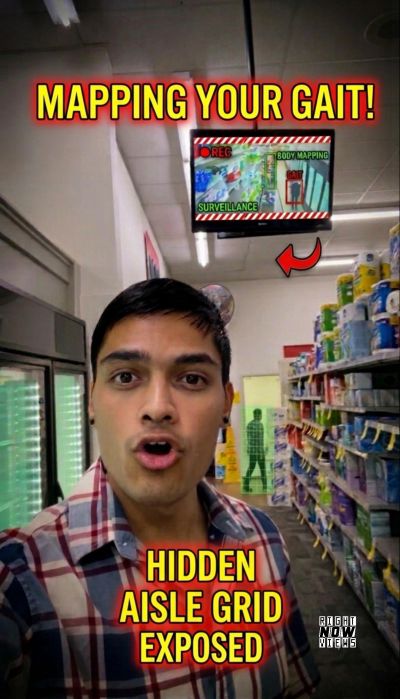
National retail chains across major metropolitan centers have expanded live deployments of integrated behavioral computer vision and automated tracking hardware directly into individual shopping aisles. Operating under the official framework of internal loss prevention and shopper analytics, continuous overhead public view monitor arrays and queue-mounted optical sensors are actively logging customer movement, dwell time, and body posture in real time.
KEY FINDINGS:
High-Density Aisle Grids: Overhead public view monitors are suspended systematically down high-value product rows, capturing continuous overhead angles. Rather than simple security playback, these arrays run real-time motion tracking algorithms to analyze customer dwell time and shelf-level behavior.
Point-of-Queue Tracking: Dedicated monitor arrays are mounted directly over pharmacy queues and service counters, maintaining continuous optical tracking while consumers wait for private transactions.
Network Integration: Localized surveillance feed infrastructure is designed for continuous data retention. Behavioral metrics, physical positioning logs, and video data are processed through centralized store networks to map foot-traffic patterns and shopper profiles across retail footprints.
Civic & Privacy Impact: The placement of high-density tracking arrays down nearly every internal walkway represents a fundamental shift from traditional loss prevention to real-time behavioral surveillance—turning simple errands into passive data-harvesting checkpoints without explicit consumer consent.
CONCLUSION:
Passive retail security is officially obsolete. Under the pretense of inventory protection and operational optimization, public retail spaces have been converted into active tracking grids—mapping physical body movement and customer positioning long before a transaction occurs.

Looking for a story that encourages observation, media literacy, and kindness? Teach the little reporters in your life that you don't have to be big to make a difference in your neighborhood.
Available September 18th in paperback on Amazon!